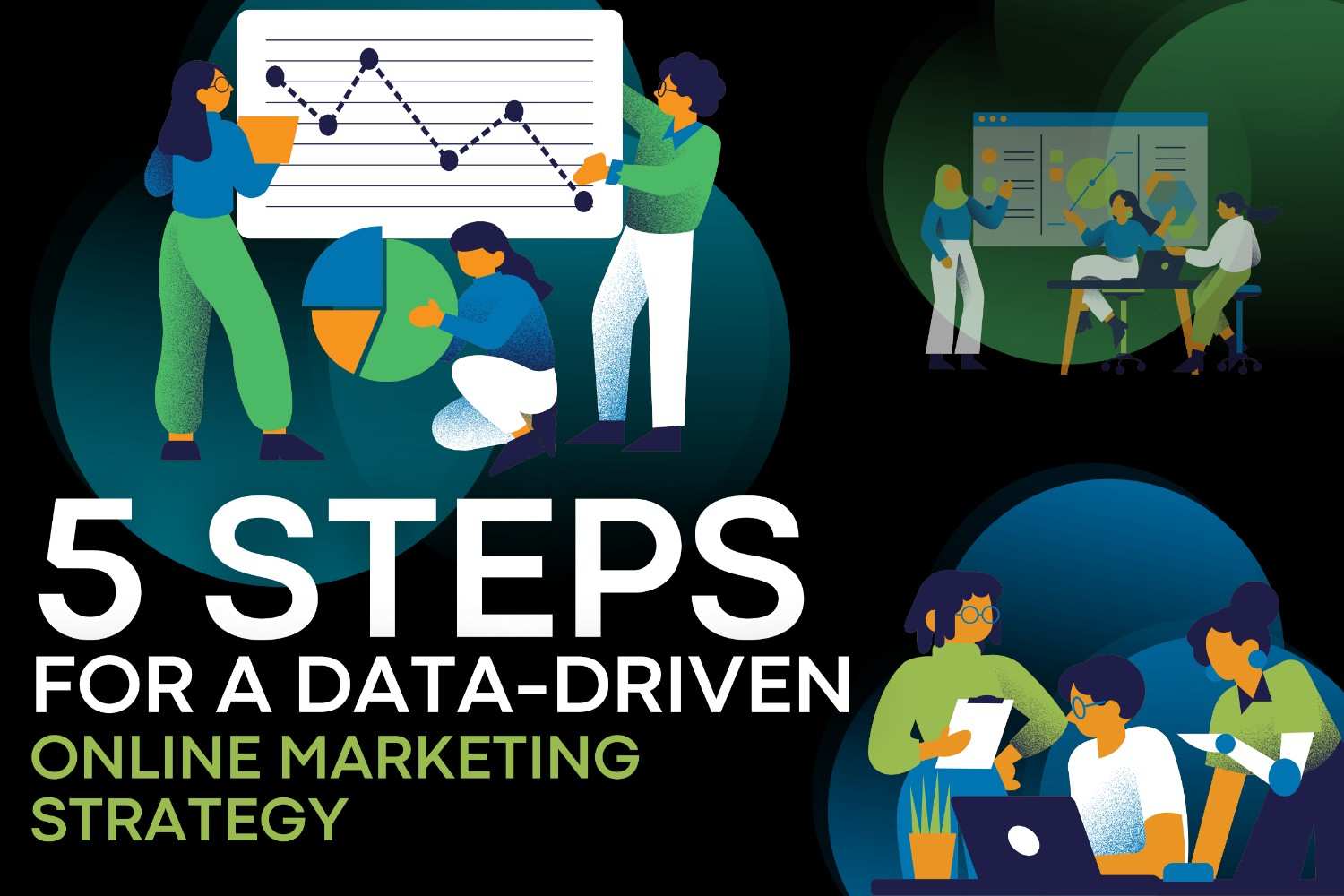
This article breaks down five clear steps that are easy to follow to create a data-driven strategy that can generate sustainable growth and long-term value.
The modern highly connected world does not allow businesses to use guesswork or intuition. Decisions that are supported by information, knowledge, and quantifiable results are the key to success. The proper planning of an online marketing strategy ensures that the brands connect with the right audience, at the right time, and at the right place. This article breaks down five clear steps that are easy to follow to create a data-driven strategy that can generate sustainable growth and long-term value.
Before diving into the steps, it’s important to briefly understand the foundation.
What is online marketing?
To explain online marketing simply, it refers to promoting products or services using the internet and digital channels. Many beginners explore Wikipedia online marketing definitions, which utilize information, platforms and technology to help customers make decisions favorably.
Step 1: Define Clear Goals and Understand Your Audience
Every successful online marketing strategy starts with clarity. Without clear objectives, even the best tools and campaigns fail to deliver meaningful results.
Ask yourself:
- What do you want to achieve? (leads, sales, brand awareness, engagement)
- Who is your target audience?
- What problems are you solving for them?
A well-developed digital marketing strategy is one that will match both the business objectives and the user intent. Data plays a key role here. Use analytics tools, surveys, CRM insights, and customer behavior reports to detect demographics, preferences and online habits.
Many people ask, online marketing is mostly useful for marketing of which businesses? The answer is simple: it works best for businesses that want scalable reach—startups, e-commerce brands, service providers, SaaS companies, and even local businesses aiming for regional visibility.
This step ensures your strategy is not random but purpose-driven.
Step 2: Choose the Right Channels Based on Data
The process of defining goals and audience is followed by picking the right channels for your online marketing strategy. Not all platforms apply to all businesses.
Data helps you decide whether to focus on:
- Search engines
- Social media platforms
- Email campaigns
- Content-driven platforms
At this point, lots of marketers mix up words. Internet marketing is concerned with marketing offerings via digital networks with cyberspace marketing in general representing brand presence on the online ecosystem.
It is also necessary to know what is not internet marketing. The print advertisement, billboards or television commercials are not considered internet-based promotion, although they can be used to supplement it.
The performance information, which includes conversion rates, engagement metrics, customer acquisition cost, etc., will help you allocate your budget more smartly by choosing the channels.
Step 3: Create High-Quality, Measurable Content
The success of any online marketing strategy is based on its content which although is fundamental, data is what makes or breaks it.
Use web marketing techniques like:
- SEO-optimized blog posts
- Educational videos
- Case studies and whitepapers
- Email newsletters
Every piece of content must have a quantifiable target, clicks, shares, leads, or sales. Understanding online advertising meaning is also helpful in this case. It is defined as paid promotions that appear in search engines, websites and social sites in order to get targeted users.
You may be asking yourself what is internet advertising, and it contains the following types of ads: search ads, display ads, social ads, and video ads, all of which are based on user data and intent.
The key is to track how users interact with your content and refine it continuously.
Step 4: Optimize Through Analytics and Automation
Marketing based on data never remains the same. Constant optimization is the next stage in your online marketing strategy after having set campaigns.
Use analytics to answer:
- Which campaigns perform best?
- Where are users dropping off?
- What content drives conversions?
Analytics dashboards, heatmaps, and A/B testing tools are some tools that are used to enhance the performance of website marketing. The tools of automation also increase efficiency by controlling email sequences, ad bidding and customer journeys.
If you are learning how to do online marketing effectively, mastering analytics is non-negotiable. Decisions should always be based on evidence, not assumptions.
The internet marketing websites and dashboards also come into play here, which provide data views of centralized data that can be easily used to make decisions.
Step 5: Scale with Innovation and Data Insights
The final step in building a sustainable online marketing strategy is scaling what works. As soon as you find successful campaigns, channels or messages, invest in them to enlarge them.
This is where creativity meets data. Use insights to explore:
- New audience segments
- Emerging platforms
- Advanced personalization
Many brands look for digital marketing strategy ideas that include influencer collaborations, artificial intelligence-driven targeting, or interactive content experiences.
In conclusion, marketing online is not about everything but it is about doing the right things, over and over again with quantifiable results.
Ready to build a results-driven online marketing strategy? Our expert digital marketing solutions help businesses turn data into actionable insights, optimize campaigns, and drive measurable growth with smarter, performance-focused strategies.
Conclusion
An online marketing strategy that is supported by data eliminates uncertainty and instead replaces it with clarity, precision and measurable growth. The businesses can develop a sustainable digital presence by being goal-oriented, selecting the appropriate channels, developing value-added content, optimizing using analytics, and intelligently scaling.
Data should inform every decision whether you are only beginning with online marketing or improving on an already existing strategy. Strategy and insights are like a combination that leads to results.