It is imperative to understand how they operate and when they should be put into practice to keep the value of SEO of your site intact and facilitate easy navigation to users.
Key takeaways for 301 and 302 Redirection:
- Choose 301 redirects for permanent URL changes preserving rankings.
- Use 302 redirects only for temporary website modifications.
- Incorrect redirect selection can reduce authority and visibility.
- Proper redirects improve indexing, navigation, and user experience.
- Align redirect strategy with long-term SEO performance goals.
Redirects are an important part of website management, search engine optimization, and user experience. When you are migrating to a new domain, fixing broken URLs or when redesigning your pages, the type of redirect you use can make a significant contribution to your rankings. The 301 and 302 redirects are the most popular of all types. It is imperative to understand how they operate and when they should be put into practice to keep the value of SEO of your site intact and facilitate easy navigation to users.
What Are Redirects and Why Do They Matter?
A redirect refers to sending the users and search engines from one URL to another. If not handled properly, redirects may lead to loss of traffic, loss in ranking, problems with duplicate content and create a confusing experience for the user. This is the reason why marketers, developers and SEO professionals should be aware of the distinction between permanent and temporary redirects.
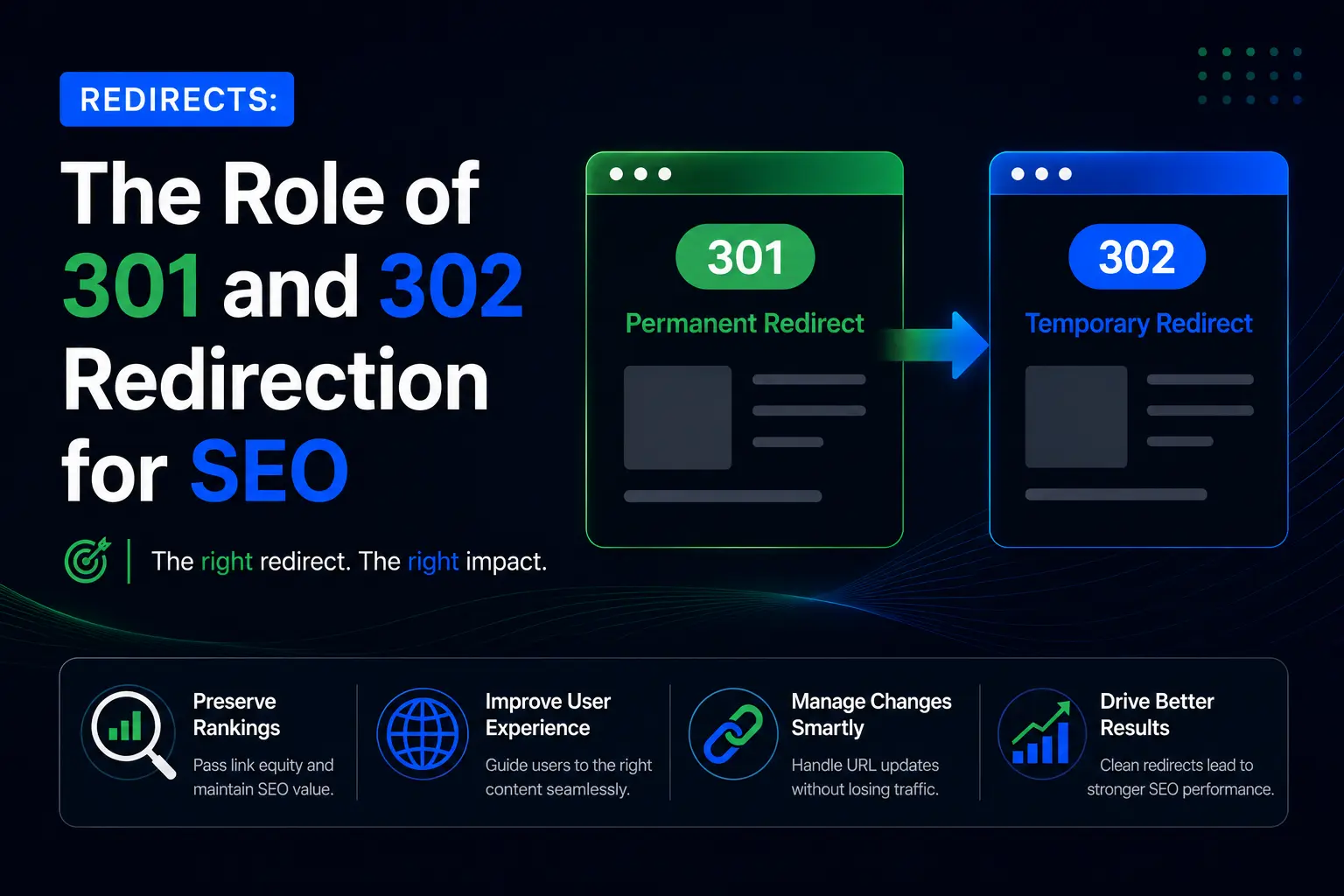
A 301 redirect is used to indicate that a page has permanently relocated whereas a 302 redirect is used to indicate a temporary relocation. Even though they can be considered minor differences, they are perceived quite differently by search engines - and this directly influences your technical SEO performance.
Understanding 301 Redirects
A 301 redirect is permanent, and it is applied in the case of a page or a complete site that has undergone permanent relocation. This form of redirect is almost totally known to transfer ranking factors such as backlinks, authority, and relevance to the new URL. It informs the engines that the old URL does not have to be indexed anymore and that it should be replaced by the new one.
Use 301 redirects when:
- You change your domain name or website migration
- You restructure your website
- You merge two similar pages
- You delete outdated content but you do not want to lose SEO value.
A 301 redirect preserves link equity, so a 301 redirect is beneficial when a significant change takes place. In discussions around redirect decisions, numerous specialists mention the 301 vs 302 redirect SEO and explain the importance of the right one to use to be ranked better in terms of stability.
Understanding 302 Redirects
A 302 redirect is temporary and comes in handy when you do not want to change the search engine indexes permanently and you just want to redirect the traffic temporarily. Given the fact that the search engines expect the original URL to do the same, the search engines usually do not transfer complete ranking information to the temporary destination.
You might use a 302 redirect when:
- A page is under maintenance
- You are A/B testing designs
- You would like to redirect users to a promotional page on a temporary basis.
- You are experimenting with page performance
This may be problematic when it is misused. As an example, a permanent URL change with a 302 redirect can still get the old version indexed by the search engines. That’s why understanding 302 redirect SEO implications is extremely important.
302 Redirect SEO: How It Affects Your Website
A 302 redirect does not transfer complete authority to the new page and this can impact rankings in the case when applied in the incorrect scenario. Talking about the 302 redirect SEO, it’s important to note that search engines may treat the temporary destination as a short-term location, i.e. the linking equity remains with the original URL.
However, when used correctly, 302 redirects protect your SEO value while allowing you flexibility. For example:
- A 302 in-site update assists you in maintaining the existing URL ranking but temporarily redirects traffic.
- For promotions or testing, a 302 will make sure that your temporary contents will not swap the primary URL in search results.
Because of this, seo 302 redirect is often discussed when businesses want to maintain traffic while making non-permanent changes.
Common Mistakes With 302 Redirects
One of the biggest SEO mistakes is using a 302 redirect instead of a 301 for permanent changes. This can cause:
- Search engines should keep on indexing old pages.
- Loss of page authority
- Lower rankings for the new URL
- Confusion for users if the old page never returns
Wrongful use by the webmasters of the temporary redirects weakens the strength of their new content.
302 Redirect SEO vs 301 Redirect SEO: Key Differences
Although both redirect users from one page to another, search engines treat each differently:
| Feature | 301 Redirect | 302 Redirect |
| Type | Permanent | Temporary |
| Link Equity | Passed Fully | Not Fully Passed |
| SEO Impact | Strong for ranking continuity | Limited or temporary |
| Use Case | Permanent Changes | Short-term Changes |
The comparison is even more significant when considering the 301 vs 302 redirect SEO since the wrong choice could impact website performance for months.
The Role of Redirects in Technical SEO
Technical SEO includes redirects. Appropriate implementation would provide:
- No broken links
- Smooth site navigation
- Preservation of link equity
- Accurate search engine indexing
- Better user experience
Incorrect redirects may add to the page load time, lead to redirect loops and indexing problems. The redirect structure is well planned to maintain a clean, well-organized, and search engine-friendly website.
Need Expert Technical SEO Services for Your Website?
Improve your website with professional technical SEO services tailored to your business goals. Partner with technical SEO specialists and transform your website into a high-performing digital asset.
Conclusion: Choosing the Right Redirect Matters
Redirects should be used with caution whether you are redesigning your web page, transferring some content, or testing some features. A 301 redirect is useful when you want to retain authority in the case of a permanent change whereas a 302 redirect is applicable to temporary changes, but only when it is applied properly.
To safeguard your rankings, never implement the 302 redirect SEO before considering the effect of the method and also make sure your redirect strategy is in line with the long-term objectives of your site. Once you know the difference and make the right choice, redirects will be a potent means of streamlining user experience and keeping the SEO performance high.