In the current rapid and digital world, businesses must prioritize web application development that are not only functional, but also scalable in view of expansion in the future.
Key takeaways for Web Application:
- Scalable architecture ensures smooth performance growth as the number of users, traffic, and business demands increase.
- Cloud infrastructure and microservices greatly increase the flexibility, reliability, and long-term scalability of applications.
- Strong security standards help secure user data and build trust as your app scales rapidly.
- Continuous testing and database optimization helps avoid bottlenecks, and improves overall application performance.
- Responsive web and mobile experiences improve user engagement, accessibility and long-term customer retention.
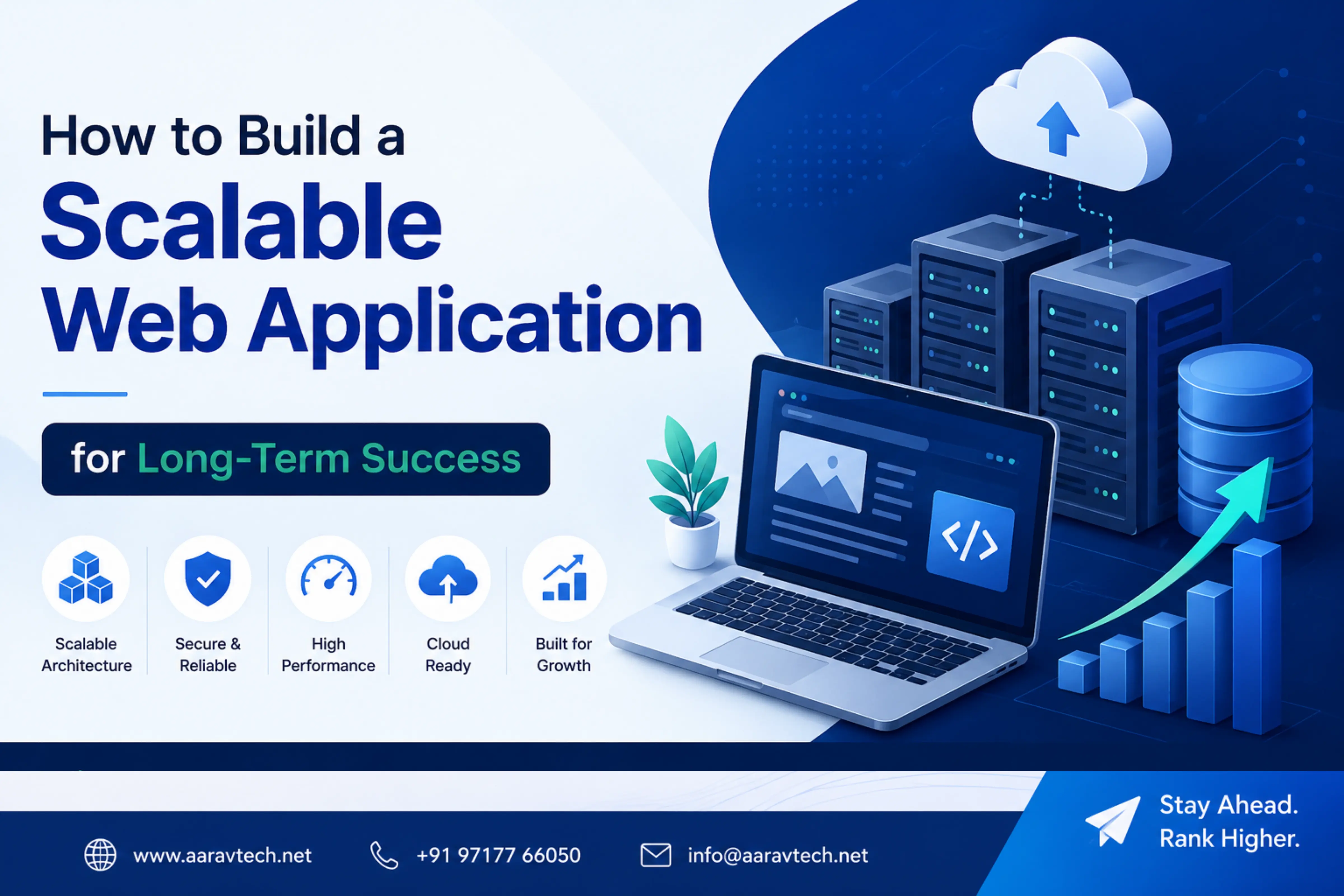
In the current rapid and digital world, businesses must prioritize web application development that are not only functional, but also scalable in view of expansion in the future. A scalable application also makes sure that your platform can manage growing users, data, and complexity without compromising performance. Regardless of whether you want to start a start-up or enterprise, it is important to know how to build a web application that is scalable to succeed in the long term.
It is a guide that simplifies advanced strategies, architecture choices as well as best practices that are guided by the understanding of the industry in an attempt to build robust, future-ready applications.
1. Understand Scalability from Day One
You need to clarify the meaning of scalability to your project before starting coding. Scalability defines the capacity of the system to expand smoothly with the rise in demand.
When planning your web based application, ask:
- How many users do you expect initially and in the future?
- Will traffic spikes occur (e.g., seasonal sales)?
- What kind of data load will your system handle?
It is an approach that can ensure you have a well-considered foundation such that your application does not require a full redesign in future.
2. Choose the Right Architecture
The importance of architecture is in scalability. Traditional monolithic systems may have trouble with the expansion of your application. Alternatively, look at new practices such as:
Architecture is very important for scalability. If your application grows, traditional monolithic systems may have problems. Think about using new methods instead, such as:• Microservices architecture breaks your app up into tiny services that don't depend on each other.
- Microservices architecture – Divides your application into smaller services that are independent of each other.
- Serverless architecture – This automatically scales based on how much you're using.
- Cloud-native design – Leverages platforms like AWS, Azure, or Google Cloud.
The choice of the appropriate web application framework (Django, Node.js, or Ruby on Rails) also affects the performance, scalability, and the speed of development.
3. Focus on Efficient Web Application Design
An effective web application design ensures not just visual appeal but also performance optimization. The ineffective design choices may cause the bottlenecks as traffic increases.
Best practices include:
- Minimizing HTTP requests
- Using lazy loading for content
- Implementing caching strategies
- Designing intuitive user flows
Good design also facilitates desktop web application experiences as well as mobile web application experiences, and makes it responsive across devices.
4. Optimize Database Performance
Your database is a very important component as your application scales. One of the most common reasons of system failure is poor database performance.
Key strategies:
- Use database indexing
- Implement read replicas
- Consider NoSQL for high-volume data
- Optimize queries regularly
Separating your database layer from your application logic allows better flexibility and scalability.
5. Prioritize Security from the Start
Without powerful security, scalability is pointless. Incorporating web application and security early on will avoid future vulnerabilities.
Focus on:
- Secure authentication and authorization
- Data encryption (in transit and at rest)
- Regular security audits
- Protection against common threats (SQL injection, XSS)
Web application security will build trust with the users and help preserve sensitive information whether you have a web site or a web application.
6. Implement Scalable Infrastructure
The present-day scalability is impossible without cloud computing. Other cloud providers such as AWS and Google Cloud enable dynamic allocation of resources.
Important techniques:
- Auto-scaling servers
- Load balancing
- Containerization (Docker, Kubernetes)
- Content Delivery Networks (CDNs)
These are tools that are employed to ensure that your application does not fail at the times when traffic surges.
7. Build for Both Web and Mobile Experiences
The current users desire device-smooth experiences. The web and mobile application approach strategy are developed to ensures broader reach and engagement.
Understanding the difference between web application and mobile application helps in choosing the right approach:
- Web apps run in browsers and are platform-independent
- Mobile apps are installed and offer better device integration
Scalability and user experience are better suited to a hybrid approach.
8. Continuous Testing and Optimization
Scalable applications need continuous enhancements. And that is where web application testing comes becomes crucial.
Types of testing to implement:
- Load testing
- Performance testing
- Security testing
- Functional testing
Enhanced web application testing tools such as Selenium, JMeter and Postman are useful to determine problems before they impact users.
9. Work with the Right Development Partner
Selecting development team appropriately can make a big difference. An experienced web application development company has knowledge on scalable architecture, performance optimization and security.
To have customized solutions, it is prudent to work with a custom web application development company that is aware of your business needs and builds solutions according to the business needs.
When you're short on internal resources, web application development services can help you move faster and still get a top-notch product.
Also Read - Web and Mobile App Development in 2026
10. Plan for Future Growth
Scalability is both technical as well as strategic. As your application evolves, you’ll need to:
- Add new features
- Integrate third-party services
- Expand to new markets
You must also always design with flexibility when you create web application solutions. The modular development and API-first approaches support easy expansion without disturbing the existing functionality.
Conclusion
Coming up with a scalable web application is not a single task, and it is a multifaceted process that needs to be planned thoroughly, depending on the modern architecture with continuous optimization. The emphasis on performance, security and user experience can help a business to progress its platforms without problems.
Investing in web application development with scalability will prevent the costly restructuring, enhance user satisfaction, and secure the long-term business performance. Whether you’re developing a start-up product, or an enterprise system, scalability must be the central goal of your strategy.