Quick Summary
- AI improves marketing productivity by automating repetitive research, reporting, content, and customer engagement tasks.
- Human expertise remains essential for originality, strategy, creativity, brand positioning, and quality control.
- AI-powered personalization helps businesses create more relevant experiences throughout the customer journey.
- Search optimization increasingly depends on intent, useful content, expertise, and conversational search behavior.
- Businesses gain greater value when AI supports measurable decisions instead of replacing marketing strategy.
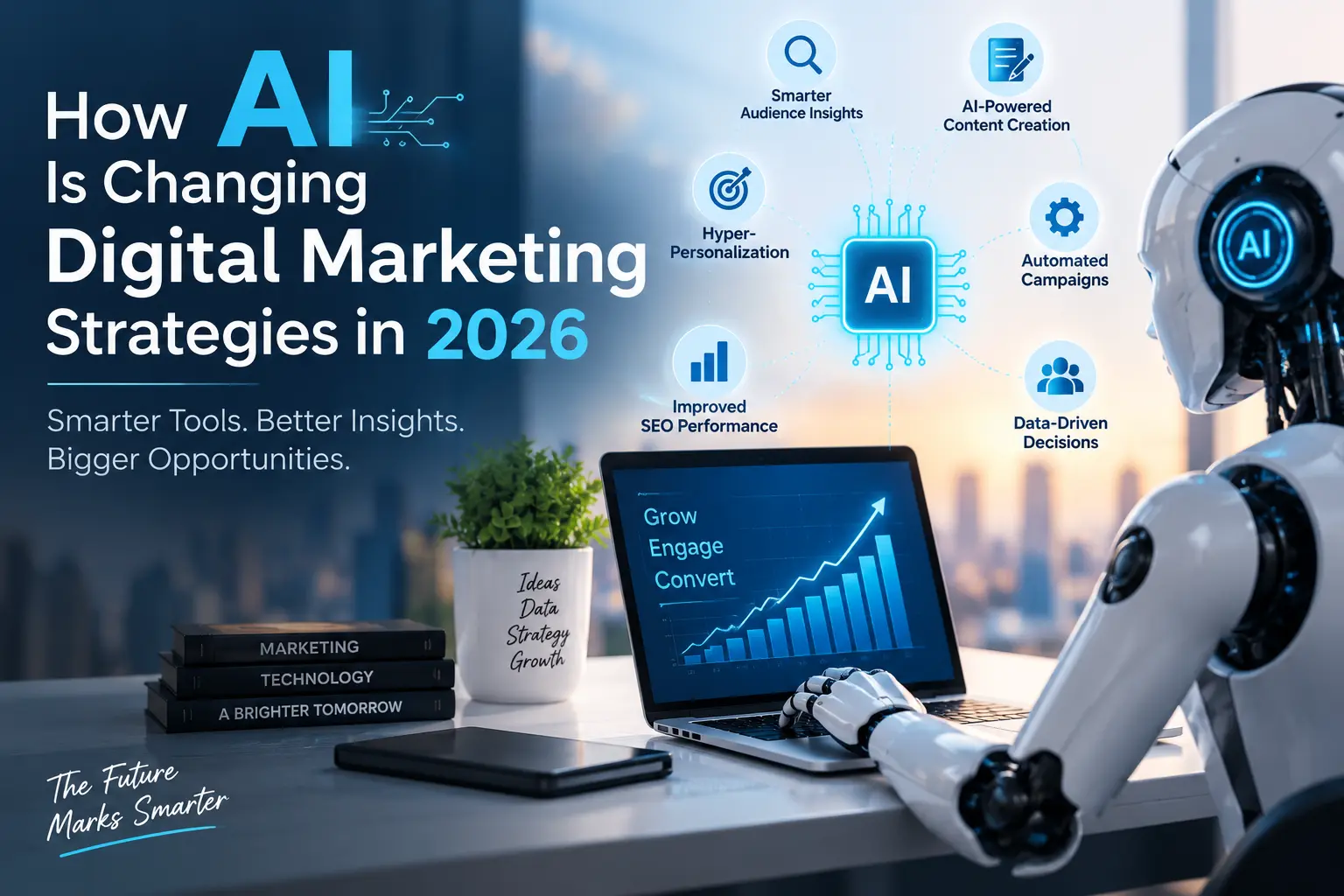
Artificial intelligence has become a practical part of digital marketing in 2026. Companies are applying AI to study audiences, generate content, optimize search engines, customize campaigns, automate tedious tasks, and analyze customer behavior.
The most significant shift is that AI is not taking over the marketing strategy. Rather, it is assisting marketers to work quicker, manage a greater number of data and make choices that are informed.
The concept of modern AI digital marketing is a combination of technology, human creativity, experience, and tactics. Companies leveraging AI aptly are able to enhance efficiency and retain the originality, quality, and brand recognition that the customers anticipate.
How AI Is Reshaping Digital Marketing
The role of AI in digital marketing has gone beyond mere automation. Today, AI is able to work with larger volumes of data, discern trends, anticipate consumer actions, and aids decision-making throughout the marketing funnel.
Businesses are using AI for:
- Content research and creation
- SEO and search-intent analysis
- Audience segmentation
- Personalized marketing
- Campaign automation
- Performance analytics
- Customer journey optimization
These applications ensure that AI digital marketing is more efficient with a marketing team dedicating a larger portion to strategy and creative decisions.
AI-Assisted Content Is Becoming More Strategic
One of the most apparent spheres where AI has an impact is on content creation. AIs enable marketers to outline, brainstorm, summarize findings, generate variants of headlines and reuse existing text.
However, faster content production does not automatically mean better content.
Artificial intelligence generated content still needs to be checked by a human factor to counteract inaccuracy, originality, relevancy and brand consistency. True expertise, examples, insights, and distinctive visions that websites should add instead of publishing generic AI output.
AI-assisted content is the most appropriate method. AI is able to take away the time-intensive entry-work and marketers can take care of the experience and decision which are necessary to make the final piece worthy.
Search Optimization Is Becoming More Data-Driven
SEO is based on the analysis of keywords, search intent, competition, content gaps, technical failures and performance. Most of the processes can be significantly expedited through AI.
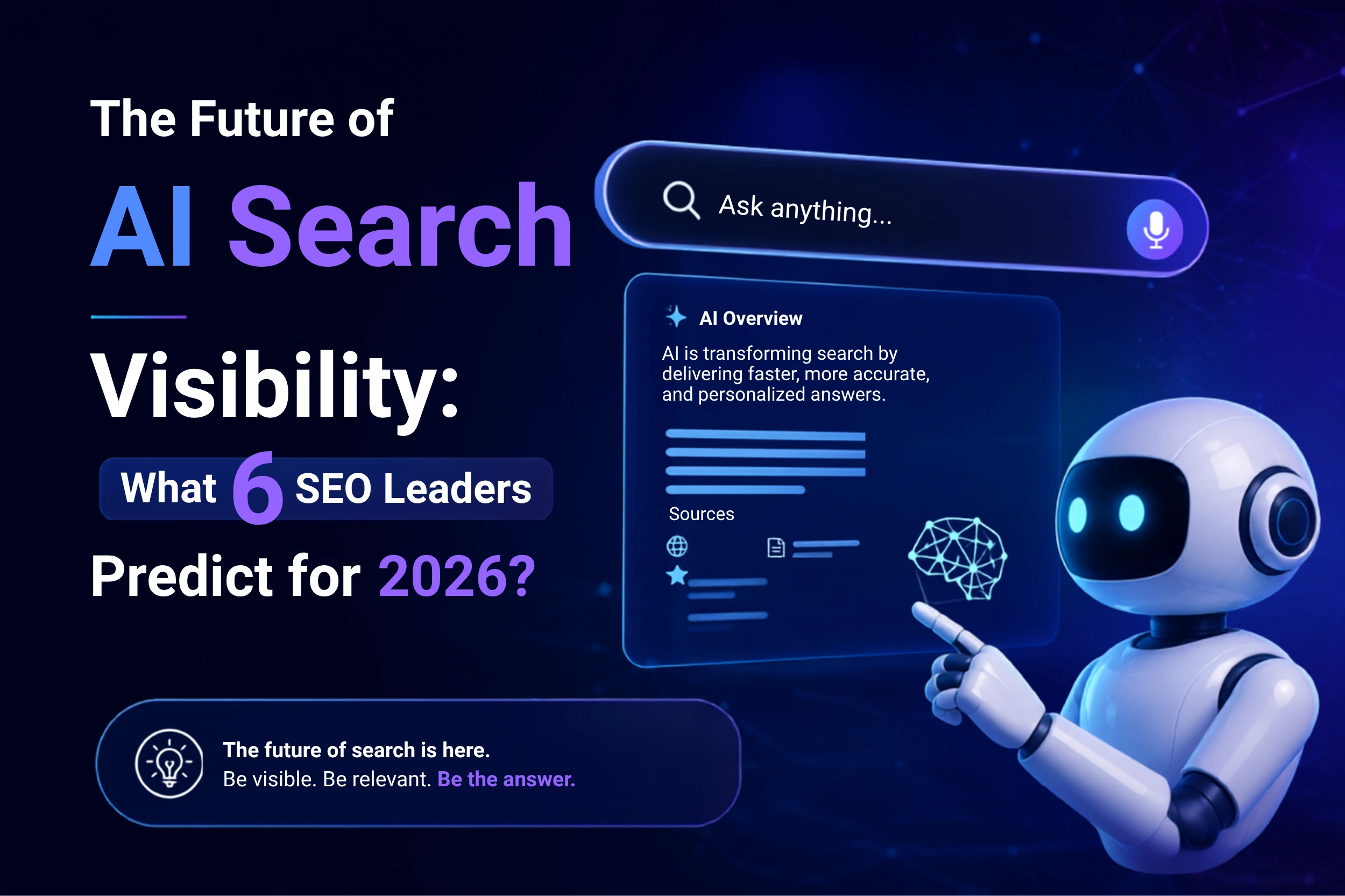
AI tools for digital marketing can aid marketers by clustering topics, evaluating search intent, creating briefs, identifying optimization prospects, and seeing trends in extensive data sets. Marketers should also keep up with emerging AI search visibility trends to understand how changing search experiences could influence SEO performance in 2026.
However, SEO does not just entail the application of AI-suggested keywords. The contents should not confuse the users but clarify their inquiries and should be useful and reliable.
With search getting more and more conversational, corporate interests should concentrate on answers being comprehensive, topical reflecting, original, and expert.
Personalization Is Improving Customer Experiences
The customers are increasingly demanding businesses to offer relevant experiences. Through the analysis of behavioral information, AI is able to assist marketers to send more personalized messages.
An example is the recommendation of products by the ecommerce business on the basis of browsing behavior and customizing the follow-up information by the service company on the basis of interests of a prospect.
This is among the most powerful uses of AI digital marketing as companies will be able to leave behind generic communication and develop customer experiences based on context.
It should still be personalized. Proper data practices in companies should be developed and the customers should not be harassed with unnecessary tracking.
Automation Saves Valuable Marketing Time
Marketing teams often spend hours on repetitive activities such as reporting, email scheduling, data organization, lead categorization, and content repurposing.
Many of these processes can be automated or faster with AI.
AI tools for digital marketing can support:
- Lead scoring and qualification
- Email workflow automation
- Campaign reporting
- Audience segmentation
- Content repurposing
- Customer support assistance
- Performance summaries
This advantage is not just time saving. Marketing processes can be brought into automation and mistakes can be minimized.
Nevertheless, significant customer-related communication and brand-related decision-making should be human-monitored by the businesses.
Analytics Are Supporting Better Decisions
Marketing provides massive data through websites, advertisement platforms, social media, email marketing and customer interactions. It may not be easy to interpret all this information manually.
AI has the ability to identify trends and convert extensive datasets into information that is useful.
To take an example, rather than just displaying that traffic to the web site was greater, the analytics, enabled by AI, can be used in detecting which audience segments contributed to the increase and the channels that bring higher engagement.
This transforms the role of AI in digital marketing from basic reporting toward decision support.
Predictive analytics may also assist the business in predicting the results of some campaigns, finding some likely users of their products, improving customer retention, and spending resources necessary to market their products in more productive ways.
Nonetheless, the use of AI should assist decision making and not substitute human judgment.
AI Can Improve Customer Journeys
Customers rarely move directly from an advertisement to a purchase. They can engage with various touchpoints, such as search engines, websites, emails, social media, reviews, and sales teams.
AI would allow marketers to learn about these interactions, and where they might be losing customers in the funnel.
As an illustration, when a large number of visitors access a service page, the marketers can research on whether the page is not providing useful information, evidence of trust, presence of clear prices, or clear call to action.
That also can be implemented through AI, which allows providing various messages depending on the position of customers in their customer experience, making it more coordinated.
Practical Ways Businesses Can Use AI
Companies do not have to automate their complete marketing process. The improved solution is to inject AI in those spheres where it can make quantifiable value.
1. Start With Repetitive Tasks
Identify activities that take significant time but require limited strategic judgment, such as reporting, research assistance, and content repurposing.
2. Integrate AI Into Existing Workflows
Apply AI to current processes of SEO, content, advertising as well as analytics instead of developing redundant systems.
3. Keep Human Review
Human oversight should be given to important contents, customer communication, advertising claims and strategic recommendations.
4. Measure Business Results
Measure AI by relevant metrics like leads, conversions, engagement, productivity, customer acquisition cost, and revenue.
5. Protect Brand Originality
AI is supposed to make marketing faster -not to sound all businesses the same. Innovative ideas and unique brand communications are still good competitive strengths.
Will AI Replace Digital Marketers?
Digital marketers are not likely to be replaced by AI. Rather, it will automate certain activities and transform the way marketing professionals utilize their time.
AI is very efficient in information processing, pattern-finding, variation creation, and predictability of workflow automation. Human is still vital in strategical thinking, creative thinking, positioning the brand, customer knowledge and making decisions of the business.
In a way that marketers learn to properly use AI, they can become more productive. Instead of taking hours to come up with reports or developing first drafts, they have more time to devote to experimentation, strategy, creative direction and growth.
The future is therefore more likely to involve AI-assisted marketers than marketing teams without human involvement.
Choosing an AI Digital Marketing Agency
Companies that lack internal capabilities can seek collaboration an AI digital marketing agency who have both the capabilities of marketing and the modern AI.
Nevertheless, companies should not pay attention to what automation claims on an agency. An efficient agency must know about SEO, content strategy, analytics, conversion optimization, branding, and target audience of the company.
Strong AI digital marketing agency incorporate AI in a strategy instead of using AI as a strategy.
Other areas that businesses should look in the agency are the way they treat human review, data privacy, originality, reporting, and performance measurement.
Aarav Tech Services: Smarter Digital Marketing Solutions
Aarav tech services assists companies to leverage technology in developing more effective and efficient digital marketing strategies.
We focus on human skill and knowledge in the fields of SEO, content, development of websites, automation, and digital growth by combining AI-assisted workflow with human expertise. We also specialize in practical solutions to ensure visibility, productivity, customer engagement and quantifiable business outcomes.
Whenever it comes to enhancing an already current online strategy, or creating a new one online, Aarav Tech Services can be able to make modern technology a working marketing benefit.
Future of AI in Digital Marketing
The future of AI in digital marketing will likely move beyond basic content generation toward connected marketing systems.
Artificial intelligence will assist businesses in comprehending customer purpose, customization, campaign arrangement, spotting chances, as well as understanding marketing quantity.
Meanwhile, human experience will be more appreciated. With the increased ease of content production through AI, originality, credibility, experience, and solid brand positioning can be considered significant points of differentiation.
Businesses that simply produce more content will not necessarily win. The ones which integrate AI with practical information, innovativeness, powerful strategy, and client insight will have a higher chance of attaining long-term outcomes.
The AI digital marketing agency model will also be changing, as agencies will become more a strategic partner, defining where AI will bring value, and where human insight must continue to dominate.
Conclusion
Digital marketing is evolving with AI through enhancing content workflows, search optimization, personalization, automation, analytics, and customer journey management.
The most effective AI digital marketing strategies will not rely on technology alone. They will unite the possibilities of AI with human experience, innovation, quality and vision of business objectives.
Companies that treat AI as a tool for productivity and better decision-making can build more efficient marketing operations while maintaining the human qualities that drive trust and long-term growth.
Frequently Asked Questions
1. How is AI changing digital marketing in 2026?
AI helps marketers automate repetitive work, analyze customer data, personalize campaigns, optimize content, improve SEO research, predict outcomes, and make faster data-informed marketing decisions.
2. Will AI replace digital marketers?
Many of the repetitive marketing activities will be automated by AI, though human marketers will continue to be crucial in strategy, creativity, brand positioning, customer understanding, judgment, and other distinct decisions.
3. What are the best uses of AI in digital marketing?
Applications such as content assistance, SEO research, personalization, audience segmentation, campaign automation, predictive analytics, lead scoring, reporting, and customer journey optimization are among the key applications.
4. Can AI-generated content perform well in search?
AI-assisted content can do well, provided that it provides correct, unique, useful data and is an example of expertise. Human editing is still relevant to quality, relevance and brand differentiation.
5. How should businesses start using AI for marketing?
The initial steps to take in businesses include repetitive, quantifiable tasks, identifying suitable AI tools, ensuring human supervision, keeping customers safe, and measuring productivity, leads, conversions, and revenue.